
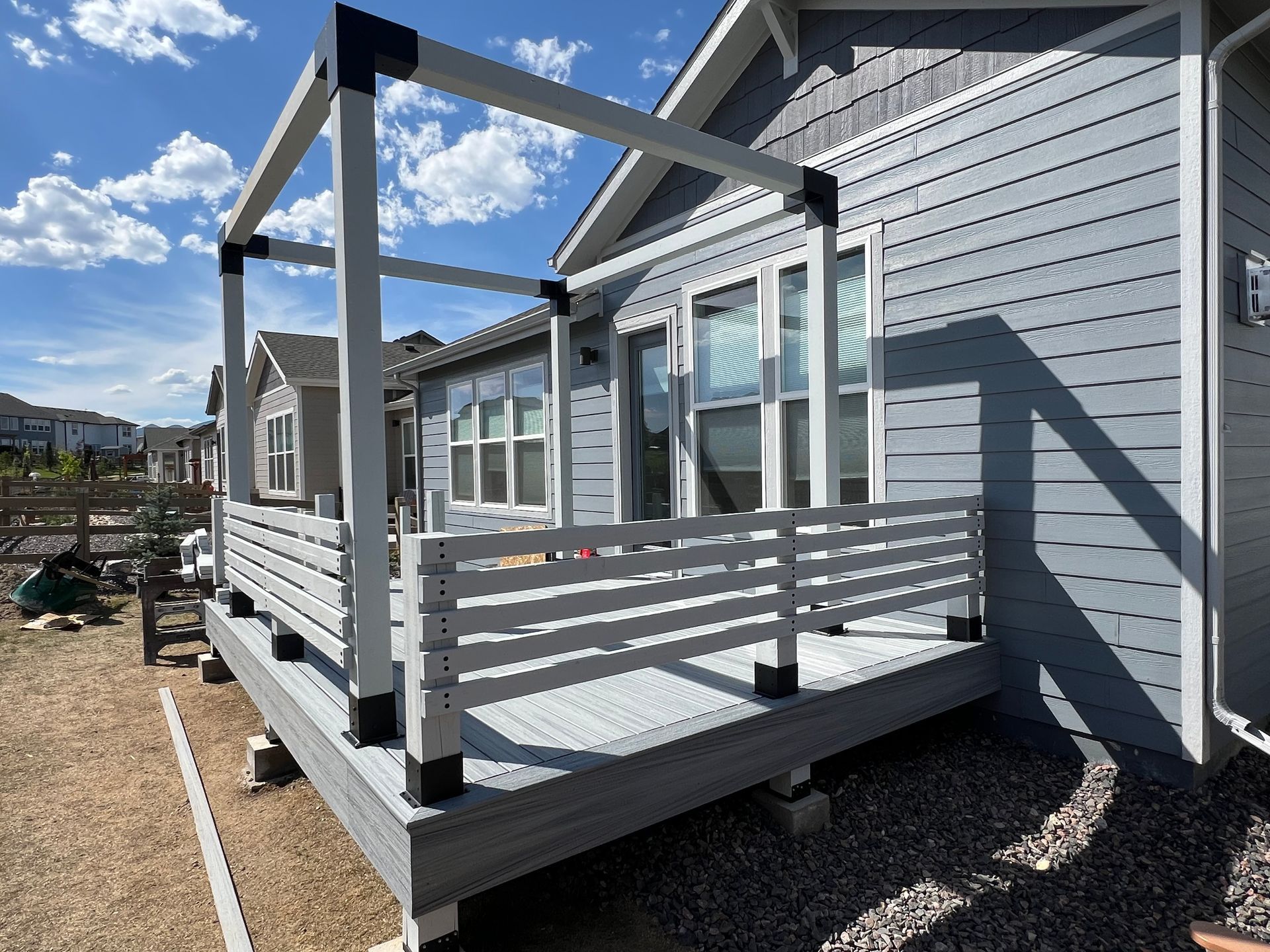
Add Outdoor Living Space That Actually Gets Used
Custom Deck Construction in Northern Colorado for backyards with uneven terrain or limited usable outdoor areas
Bishop Design Build offers custom deck construction that extends your living space outdoors and creates a level, durable surface for dining, relaxing, or entertaining. If you live in Northern Colorado and your backyard slopes, has poor drainage, or lacks a defined area for outdoor furniture, a custom deck can provide a stable platform that works with your landscape and your home's architecture. You work with a design-build team that plans the deck layout, selects materials, and coordinates structural support, so the finished deck is safe, functional, and built to last.
The design process starts with evaluating your yard, measuring slopes and distances from the house, and discussing how you plan to use the deck. If you want space for a dining table and chairs, the deck is sized accordingly. If you need steps to reach the yard or built-in seating along the edges, those features are incorporated into the design. The design-build approach means the builder reviews footing depths, beam spans, and railing requirements during the planning phase, so you do not encounter code violations or structural problems after construction. You review design drawings that show the deck layout, railing style, and how the deck connects to your home before any excavation or framing begins.
Reach out to Bishop Design Build to schedule a consultation and discuss custom deck construction options for your outdoor space in Northern Colorado.
How a Custom Deck Is Built and What It Provides
When your deck construction begins, the site is cleared and leveled, and footings are dug below the frost line to prevent shifting during freeze-thaw cycles common in Northern Colorado. Concrete is poured into the footings, and posts are installed and secured. Beams and joists are framed according to the design plan, and decking boards are laid with consistent spacing and fastened securely. Railings are installed to meet local building codes, and stairs are built if your deck is elevated above the yard. The finished deck is inspected to ensure structural integrity and code compliance.
After your custom deck is completed, you will notice that you have a stable, level surface that does not shift or wobble when you walk on it, furniture sits flat without rocking, and railings are secure and comfortable to grip. The deck expands your usable outdoor space, so you can set up a grill, arrange seating, or host gatherings without worrying about uneven ground or mud. Bishop Design Build ensures that the deck is built with proper structural support, drainage considerations, and durable materials, so it performs well through seasons of sun, rain, snow, and temperature changes.
The construction includes site preparation, footings, framing, decking installation, railings, and stairs if needed, but it does not include landscaping, outdoor kitchens, or pergolas unless those elements are part of your specific project. The timeline depends on the size and complexity of the deck, but most custom decks are completed within a few weeks once construction begins.
What Homeowners Ask About Custom Deck Construction
Homeowners in Loveland and across Northern Colorado often want to know about materials, structural requirements, and how a custom deck will hold up over time.
What decking material should I choose for durability and maintenance?
Pressure-treated lumber is affordable and durable if maintained with staining or sealing, while composite decking resists rot and fading but costs more upfront and may feel hotter underfoot in direct sun.
How deep do footings need to be for a deck in Northern Colorado?
Footings must extend below the frost line, typically around 36 inches deep in Northern Colorado, to prevent frost heave from shifting or cracking the deck structure during winter.
When is a building permit required for deck construction?
Most jurisdictions require a permit for decks that are attached to a home, elevated above a certain height, or exceed a specific square footage, and permits ensure structural and safety code compliance.
Why does railing height and spacing matter during deck construction?
Building codes specify minimum railing heights and maximum spacing between balusters to prevent falls and ensure safety, particularly for elevated decks or decks used by children.
What should I consider if my yard has a slope or drainage issues?
The deck design must account for proper footing placement on sloped terrain, and drainage around footings and under the deck should be managed to prevent water pooling and wood rot.
If you want to add usable outdoor space that complements your home and works with your yard, contact Bishop Design Build to discuss custom deck construction for your Northern Colorado property.